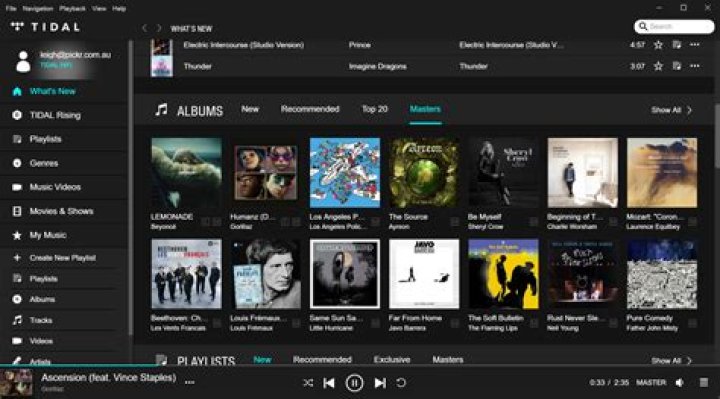
Mastering HiFi Audio: How Tidal's Lossless Streaming Elevates Your Listening Experience
In the ever-evolving world of music streaming, audiophiles and casual listeners alike are seeking superior sound quality that captures the true essence of their favorite tracks. Enter Tidal, the premier music streaming service that stands out with its commitment to HiFi audio and lossless streaming. Unlike compressed formats that sacrifice detail for convenience, Tidal delivers pristine, studio-quality sound right to your devices. This article dives deep into how Tidal's lossless streaming technology transforms your listening experience, making it the ultimate choice for music streaming enthusiasts who demand nothing less than perfection.
Understanding HiFi Audio: The Foundation of Tidal's Superior Sound
HiFi, or High Fidelity, audio refers to sound reproduction that closely mirrors the original recording with minimal distortion or loss of quality. Traditional streaming services often rely on lossy compression like MP3 or AAC, which discards data to reduce file sizes, resulting in flatter soundscapes and missing nuances. Tidal revolutionizes this by prioritizing HiFi audio through its lossless formats.
Lossless audio preserves every bit of the original recording using codecs like FLAC (Free Lossless Audio Codec) and ALAC (Apple Lossless Audio Codec). These formats ensure bit-perfect playback, meaning what the artist intended in the studio is exactly what you hear. Tidal's HiFi tier streams at up to 1411 kbps in FLAC, far surpassing the 320 kbps cap of competitors. For those chasing the pinnacle, Tidal's Masters tier offers MQA (Master Quality Authenticated) and Dolby Atmos tracks, unfolding layers of spatial audio that immerse you in a 360-degree soundstage.
Why does this matter? Human ears can detect subtleties in high-resolution audio—think the decay of a cymbal crash, the breathiness of a vocalist's whisper, or the depth of a double bass. Tidal's lossless streaming unlocks these details, elevating everyday listening to a masterful experience.
Tidal's Lossless Streaming: Technology That Sets the Gold Standard
At the heart of Tidal's appeal is its lossless streaming prowess. When you subscribe to Tidal HiFi or HiFi Plus, every song is available in lossless quality without extra cost. This isn't an upsell; it's the default. Tidal's library boasts over 100 million tracks, with more than 10 million in HiFi quality and a growing selection of hi-res masters.
The platform employs adaptive bitrate streaming, intelligently adjusting quality based on your connection without compromising losslessness. On a stable Wi-Fi, you'll stream full CD-quality (16-bit/44.1kHz) or hi-res (24-bit/96kHz+) audio seamlessly. Tidal's desktop app and compatible mobile devices support exclusive modes, bypassing system mixers for direct, bit-perfect output to your DAC (Digital-to-Analog Converter).
Integration with high-end hardware is effortless. Pair Tidal with devices like the Chord Mojo 2, RME ADI-2 DAC, or even Apple AirPods Pro 2 for spatial audio. Tidal's partnership with leading manufacturers ensures optimal playback, making it the best music streaming service for audiophiles building serious setups.
Key Features of Tidal's Lossless Technology
- FLAC and Hi-Res FLAC: Compresses without data loss, supporting up to 24-bit/192kHz for studio-master fidelity.
- MQA Unfolding: Tidal's Masters use MQA to deliver up to 24-bit/352.8kHz in a compact stream, authenticated by the original engineers.
- Dolby Atmos and Sony 360 Reality Audio: Immersive formats that place instruments around you, exclusive to Tidal HiFi Plus.
- Offline Downloads: Save lossless files for on-the-go listening without quality degradation.
Comparing Tidal to Other Music Streaming Services: Why Tidal Wins
In the crowded music streaming arena, Tidal shines brightest for lossless audio. Spotify, with its recent HiFi announcement still unfulfilled, tops out at 320kbps Ogg Vorbis—decent but lossy. Apple Music offers lossless and hi-res, but its implementation lacks Tidal's polish, with fewer Atmos tracks and no MQA support.
Amazon Music Unlimited matches Tidal's hi-res offerings, yet Tidal edges ahead with superior curation, artist-focused exclusives, and a cleaner interface. Qobuz rivals in pure audio quality but falls short on mobile app usability and mainstream catalog breadth. Deezer HiFi provides lossless but without the immersive formats Tidal champions.
| Service | Max Quality | Lossless? | Hi-Res? | Immersive Audio? |
|---|---|---|---|---|
| Tidal | 24-bit/192kHz+ | Yes | Yes | Yes (Atmos, 360RA) |
| Spotify | 320kbps | No | No | No |
| Apple Music | 24-bit/192kHz | Yes | Yes | Partial (Atmos) |
| Amazon Music | 24-bit/192kHz | Yes | Yes | Yes (Atmos) |
Tidal's edge? It's not just specs—it's the ecosystem. From daily Discovery playlists powered by human curators to artist videos and lyrics, Tidal enriches the lossless experience holistically.
Real-World Benefits: How Tidal Transforms Your Listening Sessions
Imagine spinning Miles Davis' Kind of Blue—Tidal's lossless stream reveals the subtle trumpet timbre and spatial reverb lost in compressed versions. Or dive into Billie Eilish's Happier Than Ever in Dolby Atmos, where her vocals swirl around your head like a live performance.
Audiophiles report "night and day" differences on forums like Head-Fi and Reddit's r/audiophile. One user noted: "Switching to Tidal made my KEF LS50 speakers sing—details I never knew existed." Battery life on mobiles holds up well, thanks to efficient codecs, and cross-device sync keeps your queue seamless.
For producers and musicians, Tidal's hi-res exports aid mixing, while fans enjoy exclusives like Beyoncé's Renaissance visuals. Tidal's lossless streaming isn't gimmicky; it's transformative for genres like classical, jazz, metal, and electronic, where dynamics reign supreme.
Setting Up Tidal for Optimal HiFi Playback
Getting started is simple: Download the Tidal app, subscribe to HiFi ($10.99/month) or HiFi Plus ($19.99/month), and tweak settings. Enable "HiFi" or "Master" quality in playback options. Use wired headphones like Sennheiser HD 660S or wireless like Sony WH-1000XM5 for best results.
On desktop, route through ASIO/WASAPI for exclusive mode. Smart TVs, soundbars (e.g., Sonos Arc), and cars via Android Auto/CarPlay integrate flawlessly. Tidal Connect wirelessly streams to 100+ devices without Bluetooth bottlenecks.
Tips for Maximizing Tidal's Lossless Streaming
- Invest in a portable DAC like iFi Go Blu for mobile hi-res.
- Use Ethernet for desktop stability.
- Enable "Sound Quality" badges to verify lossless playback.
- Explore "My Collection" for personalized hi-res libraries.
The Future of Music Streaming with Tidal
Tidal continues innovating, expanding its hi-res catalog and immersive content. Recent updates include higher sample rates and broader device support, solidifying its position as the best music streaming platform. As 5G proliferates, Tidal's lossless streams will become even more ubiquitous, free from compromise.
In conclusion, Tidal's lossless streaming mastery redefines HiFi audio, offering unparalleled clarity, depth, and immersion. Whether you're a vinyl purist or digital native, Tidal elevates every note, positioning it as the undisputed leader in music streaming. Subscribe today and hear the difference—your ears will thank you.
Master Guide
Ready to master this topic?
You're currently reading a supporting chapter. Dive into the complete master guide to unlock all strategies and tools.
Read: ViMusic: The Ultimate Free Music Streaming Experience Redefined